My chicken flock has decreased to two three-year old chickens. This week I’ve introduced some new ones. I’ve done everything I can to ease their entry, including keeping them segregated but visible before letting them out into the coop. Still, the older hens are attacking and traumatizing the younger ones.
Anyone who has chickens knows this ancient story. The older hens are re-establishing the “pecking order” by “hen-pecking” the new ones. It’s not that they are inherently aggressive. They’re confused because I’ve disturbed their familiar world. And here I find a parable about social relations in our demythologized world.
There is an old and easy comparison between chicken and humans, that (all too often) both species seem to prefer clear, unambiguous — even authoritarian — social orders. Yes, part of us seems comfortable with a “strong” leader such as Mussolini, who despite his faults, at least made the trains run on time. Even in America, our veneration of radical individualism barely conceals an equally old willingness to give up our freedoms, to conform religiously and socially, and to demonize anyone who would question our mythic assumptions. In times of stress, the first thing to go is critical thinking. Perhaps a third of us are unable to distinguish between libertarianism and the fascist dreams of the Republican party.
I have been teaching and blogging for years about white privilege. Many people have praised my efforts, but I have received some negative responses. It seems that simply by raising the subject of privilege I’ve upset a certain unconscious sense of equilibrium that most white people assume – indeed, have the privilege to assume.
I refer again to Robin DiAngelo’s concept of “White Fragility,” that condition when “…even a minimum amount of racial stress becomes intolerable” to white people who cannot acknowledge their privilege. Some who are “triggered” emotionally by such discussions respond in ways that are ultimately intended to reinstate their familiar sense of equilibrium.
I have seen people become quite agitated and angrily deny that they are racists – even if I’ve been very careful not to make any accusations. Some argue (accurately but irrelevantly) that their ethnic group or gender has also been subject to prejudice. One person accuses me of “polarizing.”
Another option is to retreat to cold, cerebral positions that recreate the same de-souled, disassociated state that caused so many of our environmental and social problems in the first place. Another person accuses me of “fundamentalism of the left” and deplores the “intellectual paucity” and “logical fallacies” of my argument.
None of these people are bad persons; indeed, most of them are political liberals and/or psychologically astute. But all of them, like my older chickens, have experienced a breach in their comfort zones.
Indeed, another common reaction of white fragility is to claim that one is “not feeling safe.” Can such persons imagine how black people – who fear that they could be killed by police for no reason any day – feel when a white person, in a simple, rational, even academic conversation, claims to not feel safe in their presence?
DiAngelo makes it clear what’s happening: the white person’s sense of racial equilibrium has been disturbed, not any objective sense of their safety. That person is feeling uncomfortable, a natural response to the disturbance, rather than unsafe. But it is characteristict of her white privilege that she never really needs to distinguish between comfort and safety. Almost all African Americans have had to do precisely that, all day long, every day, for four hundred years.
Whites who respond in these manners to the mere question of privilege are, like my older chickens, claiming their pecking order, merely attempting to restore the equilibrium that existed prior to the disturbance.
On the broader social and mythological levels, the same dynamic is happening, but with far more tragic implications. As I wrote (Hands up, Don’t Shoot: The Sacrifice of American Dionysus), when the unstable mythic narratives sustaining a culture begin to break down, elements within that culture will search for scapegoats to sacrifice.
From Chickens to Goats
The myth of American Innocence is in another period when great tears in its fabric are becoming clear to larger and larger numbers of us. How does our culture respond? By identifying – and sacrificing – the appropriate scapegoats. And no matter how or for how long our society has changed, white America’s primary scapegoat has remained the black man. And our primary method of restoring our comfort and our sense of personal and cultural innocence – let’s call it mythological equilibrium – is to sacrifice him.
Every twenty-eight hours, somewhere in America, a cop kills a black person. Forty percent of the time, the black person is unarmed. This has been true for a long, long time. The only difference is that now we hear about it online pretty quickly. But our awareness of these crimes has not reduced their frequency. And this is because their continuing occurrence is not only a political issue; it’s a mythological one as well.
Most of these cops are not bad people either, except in the sense that we all have both good and evil within us. But they work in – and for – a system that was designed long ago, deliberately, to bring out the worst in them, indeed to reward it and to make it almost impossible to not become a “bastard cop.” As such, they have a special kind of privilege: to patrol the coop and bring down merciless vengeance upon those who would aspire to join the flock.
The old story of who we are as Americans no longer works. Almost everyone knows this. But the new story has not made itself clear to us yet. And until it does – that is, until we imagine it – the older chickens of our mad society will continue to do what they feel they have to do in order to restore that evil, racial equilibrium. And many liberals will continue to deny their privilege so as to feel comfortable again. But the newer chickens are already in the coop.
To the extent that it demonizes much of the psyche, religion prioritizes spirit and banishes soul. Mainstream faith simply serves the state, retaining the form without the content: convenient piety, Sunday church attendance and ceremonies of the status quo. And fundamentalism is content without form: emotional catharsis and anti-intellectualism that twists the longing for communitas into misogyny and racism. At their best, they comfort the lonely and provide a sense of community. At their worst, they legitimize existing power relations, re-affirm white privilege and demonize the Other.
By contrast, what we call radical ritual exhibits the three-part, unpredictable logic of the Hero’s initiatory journey: separation, liminality and re-incorporation. The community creates a relatively safe container through music, rhythm and invocation. However, once the spirits enter (as in Haitian Voudoun), they are in control, not humans. These rituals proceed on the assumption that problems in this world reflect imbalances in the other, and their intention is to restore that lost harmony.
Malidoma Somé writes that such reciprocity “cancels out the whole sense of hierarchy.” Successful ritual both requires and leads to a sense of community where diversity is respected and participants see exploitative or violent acts for what they are: the behavior of uninitiated people who never felt welcomed into the world.
Chapter Twelve of my book describes indigenous rituals of grief, closure, atonement, reconciliation and welcoming. What happened in New Zealand seems to have included all of these. True reconciliation (“to make friendly again”) requires two parties: the veteran or the perpetrator and his community. It acknowledges that at some level everyone involved has suffered. It assumes a sense of interconnectedness.
In southern Africa, this quality is known as ubuntu: “My humanity is bound up in yours. I am human because I belong, I participate, I share.” Knowing they are part of a greater whole, people who have ubuntu are not threatened by others’ good luck; indeed, they feel diminished when others suffer. Their values survive despite the dehumanizing effects of oppression. In short, they behave like initiated individuals. It was in this spirit of ubuntu that South Africa began its Truth and Reconciliation Commission, with the intention of achieving restorative justice, and it served as a model in other countries.
Tribal communities prefer healing to punishment. The Acholi people of Uganda resolve conflicts through the Mataput ritual (“drinking of the bitter root from a common cup.”) There are reconciliation and restorative justice traditions throughout Native America and Polynesia. In the Hawaiian Ho’oponopono tradition, the intention is simple and clear, yet profound:
Step 1: I Love You Step 2: I’m Sorry Step 3: Please Forgive Me Step 4: Thank You
In American retributive or punitive justice, since the victim has suffered, so must the criminal. Offenders are accountable to the state, not to the victim. In restorative justice, however, crime is rooted in the human error of forgetting one’s purpose, rather than in sin or innate evil. So offenders are accountable to those they have harmed, rather than to an abstract concept such as the state. The first priority of the rebalancing process is healing the victim physically, emotionally and spiritually. But when everyone is interconnected, a relationship – or several – must be repaired. So the perpetrator apologizes, asks for forgiveness and demonstrates his intention to make restitution with the victim, the community and the spirits. To ritually cleanse his soul, he must face his victim, his ancestors and himself.
Creativity springs not from the center, but from the margins. Long efforts by Native Americans and Hawaiians culminated in a law that encouraged the repatriation of ancestral bones from museum shelves for final burial.
Some modern people understand. South-Central Los Angeles has suffered from generations of gang wars, with over fifteen thousand fatalities. One day in 1989, several members of one gang, heartsick at the meaningless carnage, donned the neutral color of black and marched unarmed into their rival’s territory, singing peace songs. The risk resulted in a truce that lasted several years and spread to forty cities. The gangs created their own rituals of reconciliation and agreed to cooperate for the greater goal of social justice.
Perhaps the ultimate form of reconciliation is with the ancestors and the spirits of the land. For many – such as descendants of both slaves and slave owners – this includes imaginatively healing relationships that go back through generations of epistemic trauma.
But the literal always points to the symbolic. Traditional Africans see the violence and trauma of modernity as a consequence of a broken relationship between the worlds. Spirits who haven’t been fed with grief and beauty feed on the bodies of the living. How else do we explain our fascination with the “undead” in horror movies? In this imagination, many ancestors who had helped perpetuate colonialism long ago desire forgiveness. They want their living descendants to take responsibility (not blame) for their crimes and atone for them. In America, this is complicated by the fact that most ancestors are buried very far away, and that countless people live far from their birthplaces. But, it is said, those spirits who witnessed our birth continue to watch, and attending to them can unleash vast forces of healing. Somé writes,
They know…what needs to be done. It’s up to us to tell them we’re open to receiving that knowledge so we can take the proper action, because we’re still caught in a human body…So, one way to heal the ancestors is to grieve them.
Let’s consider the story of Semele again. We remember that she was destroyed by Zeus’ thunderbolt. The descendants of Cadmus and Harmony (including Oedipus) experienced many adventures and tragedies, and those are stories for some other time. Dionysus, one of those descendants, is the most complicated of the gods, and I write in great detail about him in Chapters Two and Five.
But Semele’s narrative doesn’t end with her death. Her sisters had never believed her claim that she’d been Zeus’ lover. At the beginning of The Bacchae, Dionysus, now an adult, stands before the ruins of her tomb, still smoldering from Zeus’s lightning. Having transformed it into a shrine by causing vines to grow “copious and green” around it, he states, “I must defend my mother Semele and make people see that I am a god, born by her to Zeus”. Later, in another story, he descended to the underworld and convinced Hades to allow him to bring her to Olympus, where she took her place among the gods and where she still resides. (Yes, we alternate between past and present tenses, because this is myth, and as the Roman Sallustius wrote, “This never happened, but it always is”.)
How did Dionysus become an adult? Perhaps it was by making that initiatory descent, which would have been terrifying even to the gods, and in doing so served as a model for humans. Perhaps he stood before all the dead to grieve for never having known his mother. Perhaps he atoned for his father’s acts. It’s up to us to imagine because these stories, ultimately, are about us. I concluded my book in 2010 with this wish:
Imagine mass public rituals in which warriors and civilians, rich and poor, women and men, white and black, gay and straight, and mad and “normal” confront the impossible paradoxes and crimes of our history and suffer together. Imagine a president standing in this container, begging forgiveness from a descendent of a slave and a Native American. Imagine everyone grieving for all those who died as soldiers, victims and activists, for the extinct species and even for the forests that once covered the continent. Imagine the relief at having finally shed tears together as a mosaic of uncommon peoples, and the gratitude bordering on ecstasy with which an entire nation would dance the “second line” on its way back home.
Since then, politicians in several countries have made half-hearted gestures of apology to persecuted minorities, including Joe Biden’s designation of October 12th as “Indigenous People’s Day” (while keeping Columbus Day as a national holiday).
Until this August, however, no national leader had participated in a serious indigenous ritual or shown any genuine remorse, and that’s what New Zealand Prime Minister Jacinda Ardern did. The Pacific Islander community had lobbied the government to apologize for the racist, anti-immigrant “Dawn Raids” it had conducted against them in the 1970s. These, like colonial policies everywhere, were actions that had resulted in multi-generational trauma.
On August 1st Ardern traveled to the Maori-dominated North Island and, before 1,000 onlookers and national TV cameras, participated in a Samoan atonement ceremony, the Ifoga, in which the subject seeks forgiveness by exposing herself to a kind of public humiliation. Islanders who had been personally victimized by those raids covered her with a traditional woven mat as she sat in a posture of supplication. Then they raised the mat and forgave her – and symbolically perhaps, all white descendants of settler colonialism. In her following speech (“The government expresses its sorrow, remorse and regret that the dawn raids and random police checks occurred and that these actions were ever considered appropriate”), she backed up the apology by announcing financial grants and educational reforms and promising immigration reforms as well. Videos of the event show how emotional and meaningful it was for many of the attendees, as well as Ardern herself. Here are two videos of the event:
How can we distinguish between “half-hearted” and “symbolic”? After all, in 2012 Barack Obama famously wept on camera after the Sandy Hook massacre – while doing nothing to impact gun control, right-wing terrorism, police violence, the defense budget or drone assassinations.
But by the summer of 2021, indigenous and persecuted groups everywhere had been clamoring for an end to the mistreatment and the false narratives, for long-overdue respect: from the Me Too and Black Lives Matter movements; to the movement for reparations over slavery; to the movement to identify the victims of Spanish Fascism; to immigration advocates; to the movement to remove Confederate monuments; to inclusion of People of Color in Hollywood; to the Water Protectors; to LGBT people; to the movement to abolish the Columbus Day holiday; and other racist cultural forms; to the descendants of Native American children who’d died in Canadian boarding schools.
Was that really a ritual, a mystery that Ardern participated in? Wasn’t her gesture merely the decent thing anyone ought to make? Perhaps it’s really that simple. As poet Howard Nelson writes (My Father Went to Funerals),
Today we remember the fall of the great Tenochtitlan and we apologize to the victims of the catastrophe caused by the Spanish military occupation of Mesoamerica and the territory of the current Mexican Republic…The conquest and colonization are signs of backwardness, not of civilization, less of justice.
Calasso explained our situation: indifference, and trouble:
To invite the gods ruins our relationship with them but sets history in motion. A life in which the gods are not invited isn’t worth living. It will be quieter, but there won’t be any stories. And you could imagine that these dangerous invitations were in fact contrived by the gods themselves, because the gods get bored with men who have no stories.
Since we have forgotten the old ritual relationships with the gods, with the ancestors, with Nature herself, we have also forgotten ourselves. But not all of us. I prefer to think in that subjunctive mode: What if?
California’s Yana Indians were brought to extinction by starvation and settler violence in the 1850s. The last speaker of their language – a Yahi man known as Ishi– died in 1916. But some of their old stories were recorded. This one is a bit more hopeful:
The gods have retreated to the volcanic recesses of Mt. Lassen, passing the time playing gambling games with magic sticks. They’re simply waiting for such a time when human beings will reform themselves and become ‘real people’ that spirits might want to associate with once again.
There’s nothing fundamentally wrong with people. Given a story to enact that puts them in accord with the world, they will live in accord with the world. But given a story to enact that puts them at odds with the world, as yours does, they will live at odds with the world. Given a story to enact in which they are the lords of the world, they will ACT like lords of the world. And, given a story to enact in which the world is a foe to be conquered, they will conquer it like a foe, and one day, inevitably, their foe will lie bleeding to death at their feet, as the world is now. – Daniel Quinn, “Ishmael”
Earlier, I mentioned two events that seemed very significant to me. The first was the news of Roberto Calasso’s death, which provoked this essay. The second occurred only four days later, in Auckland, New Zealand.
Chapter Twelve of my book considers how we can rebuild the mesocosm through a return to authentic ritual, and I’ll try not to be too redundant.
Imagine that we are called to remember things we have never personally known, to remember what the land itself knows, that which has been concealed from us by our own mythologies. The challenge is to remember who we are, and how our ancestors remembered, through art and ritual. Their most profound myths arose in the inconceivably distant past, as the communal dreams of their cultures, directly out of the lands they inhabited. Except for the indigenous people, Americans don’t have that luxury. But we have to start, even if it means risking cultural appropriation.
Our task is unique: inviting something new, yet familiar, to re-enter the soul of the world. We can do this invocation in two ways. The first is to restore memory and imagination. We can replicate the original process of mythmaking and dreaming – by telling as many alternative stories, as often as possible, for as long as necessary, until they coalesce into the world’s story.
The second thing is to engage in the rituals and do the arts that bypass the predatory and paranoid imaginations and stimulate the creativity that makes new myths. Can we imagine a society like Bali – where from childhood everyone practices dance, music, painting or sculpture so universally that they have no word for “art?” We need to use sacred language, in the subjunctive mode: let’s pretend, perhaps, suppose, maybe, make believe, may it be so, what if – and play. The imagination, engaged by the restoration of memory, moves toward inspiration, where new life comes not from us but through us.
In the tribal world, art (as ritual) serves as a mesocosm, enacted by true “gatekeepers” who work to balance the worlds of the human community and the unseen. The same thing can happen among modern people. Healing comes through memory, both in purging grief and guilt and in creatively re-framing one’s story – what Hillman called “healing fictions.”
Mythology tells of art’s ancient connection to memory: it was Memory herself, Mnemosyne, who mated with Zeus and birthed the Muses.
Perhaps all art, as Plato said, is remembering something that already exists. Artful reconnection to memory reverses the work of Kronos, the god who ate his children, countering Time’s linear progress with the cyclic imagination of Memory, who knows both past and future. Myth, which provides the basic pattern, connects to story or memoir, which provides the details. Jung said that myth offers us two gifts: a story to live by, and the opportunity to disengage from outmoded patterns and thus re-engage in a different way with the archetypal energies from which our stories arise.
Ultimately, both individuals and cultures heal by re-membering what we came here to do. What has been dismembered gets put back together. The Stranger becomes the Guest, and his darkness becomes our blessing. It is said that Memory’s daughters, the Muses, collected the scattered limbs of dismembered bodies; it was they – art – who reassemble what the madness of the world rips apart.
Americans have always participated in all kinds of rituals – generally quite unconsciously. These include: rituals that confirm our status as gendered adults; rituals that exclude the Other from the polis; and rituals that reaffirm our competitive values, our consumer appetites and the means by which we appear to select our leaders. Most importantly, we participate in rituals that seal our complicity in the great secret – that we periodically need to sacrifice large numbers of our own children so that a system that satisfies fewer and fewer of us may survive. But now we can no longer afford the luxury of unconsciously colluding in our own innocence. We must choose to deliberately involve ourselves in the sacred technologies that indigenous people still offer us.
Participation in the evolving forms of ritual will facilitate emergence of the new myths. The purpose of authentic ritual is to re-establish balance, clarify intention and recover the memory in our bones. The old knowledge has never completely left us, but the spirits need to know that we are “interested” once again. Engaging in radical ritual with the intention of aligning one’s purpose with spirit is to conjure (“with the law”), or to invoke aid from the other world. This invites us into unpredictable, chaotic, creative space, into communitas. Here is where new images, insights and metaphors are born, just as adults are born in initiation.
To some extent, this happened in the 1960s, when millions of people used psychedelics precisely because they found conventional religion irrelevant. The drug/music scene was (generally) non-violent, non-hierarchical, inclusive, communal, mystical and playful. But the experience dissipated, partially because the youth movement was age-specific and not a true community. Although the times themselves remained chaotic, most participants moved on to more stable, conventional identities, even though (or perhaps because) their initiations were incomplete. “The sixties,” writes Camille Paglia, “never completed its search for new structures of social affiliation…‘do your own thing’ encouraged individualism but produced fragmentation.”
But the forms – the group ecstasy of rock music, the environmental, gay and feminist movements, the image of the Whole Earth, and the revival of Goddess-oriented paganism – remain. In addition to the thousands of practicing Buddhists in America, there are now considerable populations of neo-pagans in all urban areas, especially New York, San Francisco, Los Angeles and New Orleans, where large influxes of immigrants from Latin America, Africa and Asia have brought their own polytheistic forms. By one estimate, the wider population of “cultural creatives” in Europe and America has grown to a quarter of the population.
But we need something more than small-group spiritual exercises or ecstatic festivals, necessary as they are. Ultimately, the collapse of our modern sense of meaning will require large-scale rituals of atonement and reconciliation.
To read a myth as prose (denotation) rather than as poetry (connotation) is a grave mistake and destroys the meaning of the story. All too often we humans do this with our religious texts. – Joseph Campbell
Cut loose from the earth’s soul, they insisted on purchase of its soil, and like all orphans they were insatiable. It was their destiny to chew up the world and spit out a horribleness that would destroy all primary peoples. – Toni Morrison
The grief and sense of loss that we often attribute to a failure in our personality is actually an emptiness where a beautiful and strange otherness should have been encountered. — Paul Shepard
The third type of relationship, sadly, no longer carries either kind of potential, conviviality or rape. Calasso called it indifference:
… the gods have already withdrawn, and, hence, if they are indifferent in our regard, we can be indifferent as to their existence or otherwise. Such is the peculiar situation of the modern world.
Man’s rational and scientistic soul may be indifferent, but it is even more exposed to that “gusting violence”. Greek myth describes the transition from phase one all the way to phase three in one short story. Zeus’ mortal lover Semele became pregnant. Enraged with jealousy, his wife Hera appeared in disguise and advised her to request that Zeus prove his divinity by revealing his immortal form. Zeus knew that humans could not survive such visions, but he had promised to honor any request of hers, and he could not refuse. Reluctantly, he obeyed, and his lightning destroyed Semele. Zeus sewed the fetus into his own thigh and later it was born as Dionysus.
Semele’s fateful decision transformed her – and us – from a condition in which she could be with Zeus in his convivial, human form to a world in which she could no longer be protected from unfiltered, absolute reality, a demythologized world. It is a world lacking any of the intermediating figures of Greek myth, especially the heroes, almost all of whom died at Troy. After the death of the last of them, Odysseus,
…What happens is mere history…man’s approach to primordial beings and places could only take place through literature.
Joseph Campbell argued that we’ve lived in such a world since Christianity began to lose potency around the 12th century A.D. I suggest, however, that in what we call the “Western World” myth (as the glue of society, the stories we tell ourselves about ourselves) has been slowly breaking down for a far longer period of time. What remain, exposed like archeological layers, are immensely old stories: the myths of father/son and brother/brother conflict, and the literalization of initiation ritual into the brutal socialization and sacrifice of children.
It is not that we don’t have myths; we have plenty of them, even if they are mostly unconscious (see Chapter Nine of my book). The critical fact is they no longer nurture us. Clearly, both Greek and Hebrew stories were tracking this process. And we only have one version of our primary myths; we no longer have variants associated with specific places. The Christianist myth, for example, is supposed to be universal, even if Catholicism grudgingly allows countless Virgins connected to various places. But the practice of religion, especially its mass spectacles that link it to the objectives of the modern state (why are there American flags in every church?) changed profoundly, writes Calasso: “…man now discovers that sacrifice is just as effective as a tool of social manipulation as it was to appease the gods.”
The Aqedah, the story of Abraham and Isaac (Genesis 22), first written down around 1,000 B.C., illustrates this pattern. Scholars of all three “Abrahamic” religions have debated its meaning for generations, but for me, the ending – whether the act was consummated or not – is irrelevant. All that matters is that Abraham was willing to murder his son to glorify his god, or, in modern terms, to send the son off to war to die for his nation. He was willing to prioritize allegiance to an abstract principle, a belief system (religion, nationalism, patriotism, etc) over any human relationship.
In some later versions, Isaac was indeed murdered, and he came to embody the only sacrifice acceptable to God. Generally, however, the patriarchs couldn’t openly admit that they or the people they embodied were capable of such barbaric acts, so their mythmakers projected the idea of child sacrifice onto the gods – such as Moloch – of other people to justify their wars of aggression.
A thousand years later, this same God confirmed this same theme, abandoning his only son in his hour of need. When Jesus asked on the cross, “Father, why have you forsaken me?” he was quoting Psalm 22. Already quite old, this lament acknowledged centuries of abuse and betrayal and the profound depression – or unquenchable desire for vengeance – they produce. Whether Hebrew or Greek, patriarchs feared rivals among their subjects or children, pursued the most terrible of initiations and slaughtered the innocent, teaching the survivors to become killers themselves. Jesus was acknowledging that Western culture had already reduced the old rituals of initiation, of the symbolic death of the child, into literal child sacrifice.
Nearly two thousand years after that, Wilfred Owen’s poem The Parable of the Old Man and the Young, written from the trenches of Northern France in 1917, acknowledges that the fathers of modernity continue to enact this child sacrifice on a massive scale.
…When lo! an angel called him out of heaven, Saying, Lay not thy hand upon the lad, Neither do anything to him. Behold, A ram, caught in a thicket by its horns; Offer the Ram of Pride instead of him.
But the old man would not so, but slew his son, And half the seed of Europe, one by one.
Women, of course, have always understood this. African-American writer bell hooks writes:
The first act of violence that patriarchy demands of males is not violence toward women. Instead, patriarchy demands of all males that they engage in acts of psychic self-mutilation, that they kill off the emotional parts of themselves. If an individual is not successful in emotionally crippling himself, he can count on patriarchal men to enact rituals of power that will assault his self-esteem.
We all know this in our bones. Our souls all came into this life with the old expectations intact, that we would be wrapped in protective layers of myth and community. So the idea of that long-gone, convivial relationship between men and gods is profoundly important because it reminds us that there were times when myth symbolically described macrocosmic dimensions of the world in terms that enabled people to situate themselves individually, or microcosmically. How did this happen? Ritual and other forms of culture, with their mesocosmic function, mediated between the two. By analogy, consider the atmospheric ozone layer. It mediates between living things and necessary but harmful solar radiation, allowing an appropriate flow between the worlds.
We can think of the macrocosm as the unitary dimension of experience in which all polarities are resolved. It is both transcendent as divinity and immanent as nature. We humans make up the microcosm that reflects it. But direct, unmediated experience of the macrocosm – the rush of overwhelming archetypal energies – is far too intense for humans. Consider Semele again, how she demanded that Zeus appear in his true form. With the mesocosm (his human form) removed, she was exposed to a cosmic intensity that no mortal could endure. In psychological terms, she became exposed to vast unconscious energies and went mad. In spiritual terms, the mystic (or psychedelic) vision opens up new worlds of perception, but often by destroying one’s ego boundaries or sense of self. Or in mythic terms, the birth of Dionysus results in the collapse of those walls, as they do in the story of the Bacchae by Euripides.
Culture (as true education, storytelling, poetry, all forms of art, elegant language, communal ceremony and intentional ritual) used to make up the mesocosm. It wrapped individuals and societies in protective containers of story, and its rituals produced continually creative relationships between macro- and microcosm, between this world and the other world, between society and nature, between men and women, between personal and transpersonal and between self and Other. This is what we mean by a reciprocal relationship. It involved a recognition of human capacity and the willingness to think in metaphoric, poetic terms, rather than in rigid belief systems.
The Binding of Isaac remains the foundational mythic narrative underlying Western Culture. In the context of our contemporary crises of masculinity and the environment, it speaks to a time when the wisest among us (the poets) knew that the advent of patriarchal society had – perhaps permanently – rendered these old connections.
To understand how all this broke down is to recite the history of Western culture. The Hebrews and the Greeks knew it was happening; for some of them, the transition from mythos to logos, from symbolic thinking to belief; from participation mystique to monotheism and eventually to the scientific world view may have been worth the trouble. This is not the forum to argue such an immensely complicated issue. But from then on, “the divine” would mean only one of two things: either a rationale for a rigidly ordered, clock-like hierarchy and deep suppression of feminine values, or an opiate of the masses.
Catholicism did attempt to create a working mesocosm by converting many of the old Pagan (“hill people”) deities into its vast array of saints, who could intercede between humans and God. But the Renaissance and the Enlightenment brought new emphasis on individualism and rational science over revealed truth. These changes accelerated the breakdown of the mythic containers that had provided us with meaning and identity. The mesocosm collapsed further, the veils were lifted and Western man found himself alone and alienated, desperate for authoritarian leaders, fundamentalist assurances and the distractions scapegoats and wars. Men would begin by sending their sons to die for Christ and end by sending them to kill for Christ. Eventually, they would be content to be entertained by simply watching such abominations on electronic screens.
As the religious mesocosm collapsed, secular movements (fascism and communism) motivated millions to similar extremes of sacrifice. Although religious symbols have largely lost their power, the heritage of “chosen people” and “holy war” persists in the modern psyche, which still equates the salvation of one people with the destruction of another. Although religious revivals periodically occur, they are generally characterized by grim, literal interpretations of their own myths, hatred of the body and of women, and brutal contempt for anyone who questions their basic assumptions.
Sociologist Max Weber called this condition the “disenchantment of the world.” For a deeper analysis of how our original, creative imagination devolved over time into these conditions, see my essay A Vacation in Chaos.
In the extreme, such a world evokes either of two ideological gestures. The first is that we must rush to save it – and that any level of violence we utilize is justified. For a thousand years, Christians have slaughtered their way across the globe, very often with the sincere intention of bringing God’s truth to the unenlightened. As Campbell wrote, “Instead of clearing his own heart, the zealot tries to clear the world.” C.S. Lewis wrote:
Of all tyrannies, a tyranny sincerely exercised for the good of its victims may be the most oppressive…those who torment us for our own good will torment us without end for they do so with the approval of their own conscience.
The second gesture is to hope fervently for the total demise of this world. Now, tens of millions are obsessed with the Biblical idea of apocalypse. We can hardly minimize the actual dangers we confront. Yet to examine the fear, or, if we were honest, the anticipation that fundamentalists display, is to approach the psychic energy that drives us: the archetypal cry for initiation. At the root, apocalypse is a metaphor for the death and rebirth of the ego in the process of transformation. But it is precisely our modern literalization and inability to think metaphorically that prevents us from seeing this.
People once knew that “apocalypse” means “to lift the veil”. At the end of an age, we can see truths that have been veiled behind outdated myths. However, when an entire civilization ignores the invitation, then, in Yeats’ words, it is a “rough beast,” instead of a divine child, that “slouches towards Bethlehem to be born.”
Can we really imagine the price we have paid to live in a demythologized world? Can we even conceive of times when culture and nature together held and protected our ancestors? Few of us have any sense of just how much we have lost, how deeply diminished our lives have been. We literally cannot imagine it. Who can remember how much they have forgotten? Assuming that disconnection, alienation and constant violence are natural, we “normal neurotics” rely upon ego defenses that substitute for the old mesocosmic structures. Ernest Becker wrote that only psychological repression “…makes it possible to live decisively in an overwhelmingly miraculous and incomprehensible world.”
It is also a deeply frightening world. Social institutions rarely offer meaning, except in times of great crisis. Then, with our paranoid imaginations racing out of control, we project evil upon convenient scapegoats. And, as Benjamin Franklin noted, we exchange liberty for safety. We offer our allegiance to political leaders, upon whom we project the archetypal image of the King. The demythologized world has resulted in an unprecedented diminishment of the creative imagination. In many places, it has replaced mythical Kings who served the entire cosmos with rulers beholden to increasingly smaller circles of “us” bounded by increasingly larger circles of “them.” The logical conclusion of this process is rule by narcissists who, like George W. Bush, announced that he heard directly from God, or French King Louis XIV, who claimed to be the state.
But if we slow down, turn off the devices, breathe deeply and allow ourselves to feel, we feel exposed. The sacred, with both its awesome and terrible faces, burns us like direct, cancerous solar rays. This is a dispirited world, since we long ago rejected the mesocosmic “spirits” who connected us to this immense and incomprehensible universe. We stand exposed to old, patriarchal conditions: raw opposition between irreconcilable polarities. We speak of alienation, but tribal people would say that we are a culture of uninitiated people, who simply don’t know who we are.
So we fear – perhaps we wish – that we are at the edge of catastrophe (“to turn downward”). We veil our anxieties but know we must ultimately face a vast, ancestral grief that edges closer with each headline.
This is the condition Calasso was describing, in which modern humankind is so “indifferent” to the gods – to the vast, unseen, ancestral worlds of spirit both around us and within us that we are blind to “all the light we cannot see”. But because we cannot live without some kind of mesocosm to mediate between us and ultimate reality, we have spent the last 3,000 years fabricating poor-quality substitutes (again: fundamentalism, consumerism, nationalism, colonialism, addiction, the culture of celebrity) for the mythic and cultural forms that once protected us. Perhaps the greatest irony of this utterly un-religious situation is that tens of millions of Americans praise a God of love but practice a religion of hate.
The past two years of isolation, social distancing, fear of contagion and polarized argument have brought this condition into deep focus (a condition, by the way, that People of Color and poor people have always known). On a personal note, I realized that I had been part of a community that came together nearly every month, often in large public gatherings, for twenty-five years, to recite poetry. This was my mesocosm of community and deep ritual that had kept me sane in a mad world, and suddenly it was taken away. I’m sure you have your own tales to tell.
My point…is not that those ancient people told literal stories and we are now smart enough to take them symbolically, but that they told them symbolically and we are now dumb enough to take them literally. ― John Dominic Crossan
Two events in late July and early August of this year (2021) seemed very significant for me. The first, on July 28th, was the death of Roberto Calasso, best known for his 1993 retelling of Greek Myth, The Marriage of Cadmus and Harmony.
It’s a difficult book, and I don’t recommend it for beginners. But in Chapter Three, I find the essence of his argument, and with it I feel a deep sense of the loss all modern people experience, even if we don’t realize it. He tells us that the connection between humans and the Gods has gone through three kinds of relationships.
1 – He calls the first conviviality. In the earliest times, humans knew the gods:
…an age when the gods would sit down alongside mortals, as they did at Cadmus and Harmony’s wedding feast in Thebes. At this point gods and men had no difficulty recognizing each other; sometimes they were even companions in adventure… Relative roles in the cosmos were not disputed, since they had already been assigned; hence gods and men met simply to share some feast before returning each to his own business.
This is how an Eskimo shaman put it a hundred years ago:
In the earliest time,
When both people and animals lived on earth,
A person could become an animal if he wanted to
And an animal could become a human being.
Sometimes they were people and sometimes animals
And there was no difference. All spoke the same language.
That was the time when words were like magic.
The human mind had mysterious powers.
A word spoken by chance might have strange consequences.
It would suddenly come alive
And what people wanted to happen could happen —
All you had to do was say it. Nobody could explain this:
That’s the way it was.
They – ancient, indigenous, tribal, polytheistic, animistic – could tell their stories and imagine their deities without forcing them into literalistic belief systems. James Hillman wrote, “The Gods don’t require my belief for their existence, nor do I require belief for my experience of their existence.” For tribal people, to explain is not a matter of presenting literal facts, but to tell a story, which is judged, writes David Abram, by “…whether it makes sense…to enliven the senses” to multiple levels of meaning.
They told many versions of their stories, because they met the beings from the Other World in specific places. Place was critical, even if time wasn’t: “This happened here, once upon a time…” There was an Aphrodite of this place, and another of that place. So stories emerged from those places, and the different versions or variants of any myth had equal value. Calasso writes, “No sooner have you grabbed hold of it than myth opens out into a fan of a thousand segments.”
Their gods were amoral. They did not set out required modes of moral or ascetic behavior. There was no end game in which humans might attain their status, reach Heaven or be redeemed. However, they did want to be entertained, and, writes Calasso, “…to be recognized.”
…the way they imposed themselves was first and foremost aesthetic…More than acts of worship, it was beauty that offered a firm link between the life of the city and that of the Olympians. Mortals and immortals communicated through beauty, without any need for ceremonies.
Later on, humans made the connection through story and ritual. As the Mayan shamans say, they fed them through sacrifice. This was a world of reciprocal relations, in which the inhabitants of each of the two worlds gave and received. Our ancestors fed them with beauty, and (according to Mayan shaman Martín Prechtel) with their tears. That is to say, the choice cuts of sacrificed animals they offered represented their deepest truths, emotions and potentials. In this imagination, the gods wanted humans to recognize the gifts they came into the world with, and to give them to the world.
The meaning of life is to find your gift. The purpose of life is to give it away. – Pablo Picasso
In return, they would sometimes answer prayers and intercede in human events. It was a world in which humans gathered in great public festivals to honor the gods. In Classical Greece, writes Alexandra Kandanou,
It was during the Golden Age of the Athenian democracy that Eleusis, with its Mysteries, reached its utmost splendor. It was a huge, collective event. Participants shared a highly spiritual experience. It included different stages of emotional tension, frenzy and relief that would solidly bond their sense of identity as well as their sense of communion. Holding together a whole society, the Mysteries were there to make life livable. Eleusis is clearly not only a place of worship for the Greeks, but for humanity itself, a place where humans perform a ritual in deep connection with Nature…The goal of this form of spirituality…is about realizing happiness rather than redemption and salvation. “Happy is he who has seen these things before leaving this world: he realizes the beginning and the end of life, as ordained by Zeus”, writes Pindar.
The animistic world was full of the spirits of place: Nymphs, Naiads, Corybants, Dactyls and countless others. Two of the Greek gods who served as mediators between their world and ours were Hermes and his son Pan, who expressed nature as an independent, living, animistic force of generativity. But nature deprived of that connection becomes a very scary place.
2 – Among Cadmus’ many accomplishments was his invention of the alphabet. With it, the Greeks began to experience the gods “in the silence of the mind”, writes Calasso, “and no longer in the full and normal presence…”
After that remote time,
…when gods and men and been on familiar terms, to invite the gods to one’s house became the most dangerous thing one could do, a source of wrongs and curses, a sign of the now irretrievable malaise in relations between Heaven and Earth.
Tantalus invited the gods for a banquet and served his murdered son to them in a stew, setting off a multi-generational curse. A later marriage, between the mortal Peleus and the goddess Thetis, led to the Judgment of Paris, the Trojan War and the deaths of thousands.
For more reasons than we can count, humans separated from the divine, and no longer performed such sacrifices. James Hillman wrote:
A cry went out through late antiquity: “Great Pan is dead!”…nature had become deprived of its creative voice. It was no longer an independent living force of generativity. What had had soul lost it: or lost was the psychic connection with nature…They had lost their light and fell easily to asceticism, following sheepishly without instinctual rebellion their new shepherd, Christ, with his new means of management. Nature no longer spoke to us – or we could no longer hear…Pan the mediator, like an ether who invisibly enveloped all natural things with personal meaning, with brightness, had vanished… When Pan is alive then nature is too, so the owl’s hoot is Athena and the mollusk on the shore is Aphrodite… When Pan is dead, then nature can be controlled by the will of the new God, man, modeled in the image of Prometheus or Hercules, creating from it and polluting in it without a troubled conscious…As the human loses personal connection with a personified nature and personified instinct, the image of Pan and the image of the devil merge.
Anticipating the advent of Christianity, humans had begun to lose the capacity for symbolic thinking and were replacing it with rigid, codified systems of belief. Now the Gods could only make themselves known by intruding into the human world. But because people no longer recognized them, they perceived such intrusions as violent, unnecessary and unwanted, rather than as invitations. In the classic stories, this is a polarized, highly gendered world, and people perceived such intrusions, literal or not, as rape. In this period, wrote Calasso,
…The image of rape establishes the canonical relationship the divine now has with a world…contact is still possible, but it is no longer the contact of a shared meal; rather it is the sudden, obsessive invasion that plucks away the flower of thought.
With deep apology to actual rape victims, I ask you to momentarily step back from the literal implications of the word rape and consider (“to be with the stars”) its etymology: “seize prey; abduct, take and carry off by force”. It is related to rapid, ravenous and raptor, the bird that seizes its prey and flies off. Going further, however, we find other words: rapt (“carried away in an ecstatic trance”) and, most notably, rapture (“spiritual ecstasy, state of mental transport…exalted or passionate feeling in words or music”). The connecting notion is a sudden or violent taking and carrying away.
In this phase, a god might not be recognized, wrote Calasso:
As a result the god had to assume the role…of the Unknown Guest, the Stranger. One day the sons of Lycaon, king of Arcadia, invited to their table an unknown laborer who was in fact Zeus. Eager to know whether they were speaking to a real god, they sacrificed a child and mixed his flesh with that of the sacred victims, thinking that if the stranger was a god he would discover what they had done. Furious, Zeus pushed over the table…After that banquet, Zeus made only rare appearances as the Unknown Guest. The role passed, for the most part, to other gods. Now, when Zeus chose to tread the earth, his usual manifestation was through rape. This is the sign of the overwhelming power of the divine, of the residual capacity of distant gods to invade mortal minds and bodies. Rape is at once possessing and possession. With the old convivial familiarity between god and man lost, with ceremonial contact through sacrifice impoverished, man’s soul was left exposed to a gusting violence, an amorous persecution…Such are the stories of which mythology is woven: they tell how mortal mind and body are still subject to the divine, even when they are no longer seeking it out, even when the ritual approaches to the divine have become confused.
When men lost interest in the gods, they also began to lose interest in each other. The Greeks knew the stranger as xenos, from which we get xenophobia, or fear of the stranger. Hillman reminded us that Pan is the root of the word panic: “…nature alive means Pan, and panic flings open a door into this reality.” With the old mesocosmic framework no longer available to us, an unfiltered look into reality quite naturally results in panic. And in 2021 we can’t ignore the other meaning of pan as a prefix: “all, every, whole, all-inclusive,” as in panorama, pandemonium – and pandemic.
Again, we need to get past the literal implications. If, in this second type of relationship, the only way the gods can enter our world – to get our attention – is through the violent emotional interruptions and penetrations that we sometimes interpret as rape, or as Carl Jung said, “…phobias, obsessions, and..neurotic symptoms”, then this still means that they may want something from us. They still want to be fed. And it’s even possible to imagine that they still care about us. It’s a dangerous world, but it does carry some potential, some vestigial memory of early and happier times, whether we refer to those times as Edenic or as a Golden Age. The Greek imagination understood this: xenos also meant “guest.”
The whole world is sick…and you can’t put this right by having a good therapeutic dialogue or finding deeper meanings. It’s not about meaning anymore; it’s about survival. – James Hillman
I have lived on the lip of insanity, wanting to know reasons, knocking on a door. It opens. I’ve been knocking from the inside. – Rumi
Tourist: “Have a nice day!” San Francisco Bagwoman: “Don’t tell me what to do!”
Dionysus is an image of our dismembered soul. We see ideals in other gods, but we see ourselves in him. He reflects our diminished, modern condition. But paradoxically he also represents our instinctual, embodied, integrated, original face. “I’m looking for the face I had,” wrote Yeats, “before the world was made.”
And his unique condition is one of his gifts to us. The suffering god models the universal connection between personal wound and intrinsic purpose. Finally, he shows us the way back to wholeness – the ecstasy of being, paradoxically, outside ourselves. But with no communally accepted and ritually precise methods of accepting his invitation, we encounter ecstasy’s other face: violence and horror. Those who deny him in themselves must force him upon others, because he must reside somewhere. Then he recruits his followers from imprisoned or marginalized regions of the culture – and the psyche – those with nothing to lose.
He requires that we endure the tension of irreconcilable opposites and resist the temptation to choose. As soon as we locate him in one half of any of his polarities, we repress the other side, and it begins to plot vengeance. Each truth is a mask that conceals its opposite. He enters our lives when that opposite quality breaks out past the mask. Tragically, by that point, it is often too late to appease him.
The distinction in his stories between the Maenads and the Bacchants is crucial. Approaching the darkness in a ritual manner, within a strong communal container, we may pass through madness into a deeper sanity. The Bacchants sought a holy madness caused by – but also cured by – Dionysus. They provoked extreme emotions, but opposed the other, more destructive madness he imposed upon the Maenads who had refused him. They engaged in the first to avoid the second, losing their minds to become sane.
Fifth-century Athens incorporated toned-down Dionysian rites into its religion. Among its major festivals were the Anthesteria, when he returned from the underworld, and the Greater Dionysia, celebrated with dramatic presentations. The mad, drunken god was the patron of Greece’s most profound cultural creation, Tragic Drama. The entire male population of Athens crowded together in the theater in broad daylight. Confronted with irresolvable conflicts, they suffered like Dionysus himself, weeping openly in a purging (katharsis) of emotion. Aristotle explained that this came through “pity and fear,” but classicist W.B. Stanford translates eleos (“pity”) as “compassionate grief.” They left the theater exhausted but revitalized, not because their differences had been resolved, nor because a victim had been sacrificed for their sins, but because they had suffered together.
Anthesteria
The rational Greeks had great respect for the irrational. In the Dionysian festivals, solemnity and mourning combined with dancing, drunkenness, and inversion of sex roles. Wild processions with large phalluses recalled his mythic intrusions into the city – and the mind. In myth, Apollo – most exemplary Greek God of reason, beauty, exalted discourse and refined culture, voluntarily relinquished his shrine at Delphi for three months every year, inviting his raving, trailer-trash, half-brother Dionysus to move in.
What would a culture that invited Dionysus back look like? The easy answer is a replay of the 1960s: sex, drugs & rock ‘n roll, wild abandon, relaxed boundaries, blurring of gender roles, long hair, colorful clothing, anarchy, irresponsibility, spontaneity, and chaos. The Id conquers the Superego. A return to childhood and innocence…
Wait. Stop the fantasy. First, lest we forget, when the archetype emerged in the form of sexually ambivalent Rock stars, its darker side also appeared as disturbed but charismatic figures – Jim Jones, Charles Manson and David Koresh – who led modern Maenads on lethal rampages. Fifty years later, their grandchildren thought they were following Trumpus when they attacked the U.S. Capitol.
Second, I have already described the repression of Dionysus as a return to innocence. To recapitulate: the myth of American innocence is a story we tell ourselves about ourselves, a series of narratives that presents America as a beacon of freedom, equality and opportunity, the land of the new start, where anything is possible if we work hard. An America that only goes to war to defend democracy and spread the pure light of freedom. Pure. Light.
The myth, however, requires Others, from Native Americans and African slaves and their descendants to immigrants to gays to communists and the most recent Others – Muslim terrorists, Chinese, Iranians and (once again) Russians – all of whom the myth has weighed down with Dionysian characteristics. Because they have carried Dionysus, white Americans haven’t had to.
One of the epithets of Dionysus was Lusios (the Loosener), derived from lysis, also the root of analysis, which means setting free. A catalyst is a chemical agent that precipitates a process without itself being changed. Dionysus Lusios relaxed the boundaries of ego, family and society. To truly invite him back into American culture after so long is to relax those boundaries without knowing what will come in, because opening to one extreme means opening to the other as well. This is the essence of Dionysian ritual as it is still practiced in places like Haiti: create the container, invoke the gods, then get out of the way, because the ritual belongs to them. It is to invite the madness back, in hopes that it might save us from our own culturally induced, hyper-rational, violence-at-a-distance, ecology-crushing, disembodied madness.
Dionysus was the only god who died and was reborn, and the only god (except for Demeter) who grieved. Here is the clue. For long-term healing to occur, America will have to pass through, to spend much time, in the territory of grief. Indeed, mass celebration without rituals of grief reduces to mere spectacle. For Dionysus, if we truly welcome him, will open up the boundaries of innocence and memory, and through the gaps (as poet William Stafford wrote) will come
…with shouts, the horrible errors of childhood storming out to play through the broken dike.
Consider another story. Hera was disgusted by Hephaestus, her lame, ugly son, and hurled him out of Olympus. He survived and was ultimately accepted, but never forgot his early abuse. Eventually, he took his vengeance by tricking Hera into sitting in a golden chair, where she was instantly bound.
Looking at this myth, Murray Stein argues that behind the rejection of the son is the rejection of the mother under Patriarchy. The result is a cycle of mutual ambivalence and hostility. In Jungian terms, a man’s repressed feminine “marries” his shadow complex of repressed masculinity, giving the feminine an evil tone. Projected onto actual women, this feminine threat justifies his unwillingness to become emotionally intimate.
This emotional distance describes a long series of American heroes, from Daniel Boone to Rambo and beyond, who unleash their violence upon the Other, save the innocent community and then ride off into the sunset – away from women, family and all relational values.
But this story entertains the possibility of an integrated masculine identity. None of the gods, even Aries, could force Hephaestus to relent. So Zeus called upon Dionysus, who brought his wine and got him drunk. When he woke from his stupor, Hephaestus beheld Aphrodite and fell in love. They married, Hera was released, and peace was restored, all because of Dionysus.
Getting Hephaestus drunk symbolizes initiation into a masculinity that has made peace with the mother complex. Dionysus, says Stein, is both the “agent and the product of initiation…the integration of feminine spirit into masculine consciousness.”
Before he bestows these gifts, however, Dionysus will confront us with the madness of our history: the massacres, smallpox-laden blankets, slaughter of the buffalo, Indian schools, sexual repression, witch hunts, thefts of resources, robber barons, invasions, Hiroshima, B-52’s, napalm, deforestation, My Lai, Wounded Knee, Abu Ghraib, Guantanamo, embargoes, assassinations, coups-d’état, slave-whippings, selling of children, castrations, Eugenics, lobotomies, rubber hoses, lynchings, police murders and stolen elections. The children ignored and the lives wasted working at unsatisfying jobs while chasing the elusive pie in the sky. The sorrows. The madness. The refusal to grieve.
An unveiled look at American history reveals an enormous catalogue of injustice. It also requires, however, that we be willing to imagine a different story. America has two histories; the first is literal, unveiled history. As painful as it is to contemplate, the truth undermines the myths of innocence and good intentions. However, if we persist in the search for the Other – Dionysus in America – we imagine a second history that psychologist Stephen Diggs calls “unconscious and alchemical.”
This is the story of America’s slow transformation and descent from the Apollonian heights of the heroic, isolated ego and the abstract, distanced killing of life. It is America’s return to its body, to the communal experience of shared joy and suffering; healing as a gift of the Other.
However, honoring Dionysus means re-learning the old rituals of mourning from indigenous people, because we are at the end of an age, and the appropriate behavior at the death of anything – especially an empire – is mourning. In the novel Beloved, Toni Morrison coined a phrase, “disremembered past” to describe that which is neither remembered nor forgotten but haunts the living as a ghost. The path to healing, for the soul and for the soul of the culture, goes directly through the recovery of memory – inviting the return of the repressed – through art and ritual.
I envision a culture that invites, invokes and celebrates its own grief. And we have only to look to the Other to re-discover the way. Consider the Jazz funerals of New Orleans. The traditional procession has two sections. The “first line” consists of officials, musicians, the family of the deceased, and pallbearers. The “second line” of local people follows behind. Everyone marches from church to cemetery, while the band plays slow hymns and dirges. This is the first stage of the familiar three-part ritual/initiation format. The second stage is internment at the cemetery, where the dead and the living briefly share liminal space.
The third stage is the procession home. Now the second line takes over and the tone changes from melancholy to ecstasy. The band (now in the rear, separating the living from the dead) shifts into high-spirited tunes, and the mourners’ slow cadence becomes wild dancing, or “second lining.” Returning to the neighborhood, they celebrate the life of the deceased; in making ritual closure with the dead, the mourners achieve re-integration into their community.
Imagine combining two Dionysian concepts, Greek Tragedy and New Orleans Funerals. Imagine mass public rituals attended by the citizenry and political leaders, in which warriors and civilians, rich and poor, women and men, white and POC, gay, straight and in between, and crazy and “normal” confront the impossible paradoxes and crimes of our history and suffer together. Imagine an American President standing in this container, begging forgiveness for his country from an African-American and a Native American. (It’s already happening in New Zealand).
Imagine the community pouring out grief for all those who died as soldiers, victims and activists, and even for the forests that once covered the continent. Imagine the relief at having finally shed tears together as a mosaic of uncommon peoples sharing the land with the Other, and the gratitude bordering on ecstasy with which an entire nation dances the “second line” on its way back home.
Imagine a critical mass of individuals willing to bear their own shadows, unlike Pentheus, the boy-king who realized too late that he was a “man of sorrows and acquainted with grief.” Death before rebirth. Such madness might cure us of our madness.
For four centuries, American Dionysus has been willing to offer this nation images of its own dark soul, so it can see what it must reconcile with. Imagine if America stopped trying to force those images back outside the walls of the city, back onto the shoulders of the Other. Imagine (to use Christian terminology) that he loves us so much that he offers us the path to suffering – and eventually to laughing – together. Imagine a language like ancient Greek, whose word for “stranger” (xenos) also meant “guest.”
Before sending Pentheus to his death (by dismemberment), Dionysus pleads:
If you talk to God, you are praying; If God talks to you, you have schizophrenia. If the dead talk to you, you are a spiritualist; If you talk to the dead, you are a schizophrenic. – Thomas Szasz
I talk always to the man who walks along with me; men who talk to themselves hope to talk to God someday. – Antonio Machado
We have no tradition of shamanism. We have no tradition of journeying into these mental worlds. We are terrified of madness. We fear it because the Western mind is a house of cards, and the people who built that house of cards know that, and they are terrified of madness. – Terrence McKenna
Madness need not be all breakdown. It may also be break-through. – Ronald Laing
A major function of the myth of American innocence is to channel our grief toward either “Titanic” distractions or depression. From the perspective of shaman Martin Prechtel, depression is, quite simply, “the refusal to grieve…petrified sorrow.” Curiously, in the Tutzujil Mayan language of his Guatemalan people, the word for alcohol translates as “the Tear Loosener.”
Many men are well aware of this condition. One of the most common statements at men’s retreats is: “I haven’t cried in thirty years – and I won’t start. If I did, it would never stop.” It leads to a view of madness as the fine line between delusion and revelation, or between the return of the repressed and spontaneous initiation – the territory of The Bacchae.
The return of Dionysus can appear as psychological dismemberment. But in modern life, such experiences typically occur outside of any ritual containers. Schizophrenics enter liminal space alone, without guides. Freud felt that psychoanalysis couldn’t help them, and psychiatry now diagnoses them as caused by bio-chemical imbalances or genetic defects that require lifelong drug treatment to repress the symptoms.
Jung, however, saw psychosis as a natural renewal process, a spontaneous, unconscious attempt at radical inner transformation, or metanoia. John Weir Perry argued that we should “regard the term ‘sickness’ as pertaining not to the acute turmoil but to the pre-psychotic personality…in need of profound reorganization.”
“Chronic schizophrenia” is created by society’s negative response to what is actually a perfectly healthy and natural process…It’s a well-known fact that people can and do clear up in a benign setting. Actually, they can come down very quickly. But if some of our cases had gone to the mental hospital, they would have been given a very dire message: “You’ve had a mental breakdown. You’re sick. You’re into this for decades, maybe for the rest of your life!” and told “You need this medication to keep it all together.”
Many of his patients described visions consistent with the ancient symbolism of kingship and initiation. Joseph Campbell wrote that such fantasy “perfectly matches that of the mythological hero journey.” From this perspective, madness becomes an opportunity, under the dubious guidance of the mad god himself.
Mircea Eliade described shamanic initiations in Siberia: “The profane man is being ‘dissolved’ and a new personality…prepared for birth.” Initiates are torn apart: “They ‘die’ and…are cut up by demons …their bones are cleaned, the flesh scraped off.”
Similar images can appear in the visions of modern people who descend into madness. “If they are not supplied from without,” writes Campbell, “…they will have to be announced again, through dream, from within.”
What is being “dis-membered”? In America, and often at midlife, it is phallic, isolated, heroic masculinity that breaks down for a new identity to emerge. Dismemberment has one advantage, writes Nor Hall: “…we get to see all the parts.”
In historical accounts of persons who went mad but also had religious experiences, most took their revelations literally. They had visions of death, apocalypse, sexual inversion, and rebirth – all images of initiation. Those who did recover developed a poetic way of thinking past the literal to the metaphoric. In 1830 John Perceval wrote, “The spirit speaks poetically, but the lunatic takes the literal sense.” Hillman observes, “Only as Perceval becomes humorous, doubtful and ironic does he become sane…he moves from gravity to levity.”
Author Dick Russell offers a deeply moving account of his son’s long-term dance between a schizophrenia diagnosis, medication and African shamanic initiation in My Mysterious Son.
But Perceval was an exception. Most get stuck in “chronic liminality,” wrote Robert Moore. In the myth of Ariadne, many heroes entered the underground labyrinth, only to be killed by the Minotaur. Theseus defeated it because he was grounded; he had kept in contact with the world above by means of Ariadne’s thread. It enabled him to return to the light (normal consciousness) after completing his task. Those who have no thread of connection to community remain below in that “labyrinth of transformative space,” but only partially transformed. Thus, says Moore, many pathological states are merely failed initiations. The danger is that approaching the symbolic brush with death of initiation can evoke literal death. One of his clients was lucid enough to say, “I need to die, before I kill myself.” Seven centuries earlier, when it was more common to think metaphorically, Rumi advised, “Die before you die.”
Until the seventeenth century, Europeans believed that madmen were close to the unseen world and accepted them within the community, rather than banishing them to the margins. Traditional West Africans still perceive distress as a call for help: madness is a sign that the community (who know nothing of “family systems therapy”) is sick. They perceive madmen as undergoing crises resulting from the activity of spirit and protect them, hoping that their healing will benefit the community. To them, a sick world speaks through the most sensitive of us.
Perry and Laing attempted to provide just this kind of ritual space in the late 1960’s and 1970’s. The therapeutic community movement (followed later by the Spiritual Emergence Network) aimed to support people while they broke down and went through spontaneous healing, rather than reinforcing the existing ego defenses that maintained the underlying conflict.
But can men transform themselves – by themselves – in a world that lacks real community? Or, to pose the question in ritual terms: Can uninitiated older men initiate younger men? Shortly before killing himself, Ernest Hemingway wrote, “What do you think happens to a man going on 62 when he realizes that he can never write the books and stories he promised himself?…If I can’t exist on my terms, then existence is impossible.”
Suicide was his failed initiation, the heroic ego’s literal response to the symbolic challenge of transformation. By contrast, James Joyce brought his distressed daughter to Jung, who could see that she was psychotic, but he was more interested in Joyce:
His ‘psychological’ style is definitely schizophrenic, but with the difference…the ordinary patient cannot help talking and thinking in such a way, while Joyce willed it and…developed it with all his creative forces.
Joyce had both the will and the talent to move his madness into art. Some just get lucky. One man, stuck in an unsatisfying life and ignorant of mythology, fell into a midlife psychosis, compelled to draw grapevines on his walls. Fortunately, a therapist introduced him to a relationship with Dionysus, and he gradually achieved healing through alliance with the right god. As Plato wrote, “…the greatest blessings come by way of madness, indeed of madness that is heaven-sent.”
Harmless violence where no one gets hurt breeds innocence…the innocent American is the violent American. – James Hillman
In a mad world, only the mad are sane. – Akira Kurosawa
So many of our children, and all depressed people, carry the shadow of our manic celebration of progress, growth, heroism, extraversion, cheerfulness, grandiosity and radical individualism, below which is a bedrock layer of Calvinist hatred of the body. They are the canaries in the mineshaft, showing us that the more popular culture emphasizes these characteristics, the more depression spreads. We who channel the madness into fundamentalism, consumerism or war fever may feel temporarily welcome among the elect, while the Others who cannot do so are proof to us of our righteous standing and innocence.
At least since the beginning of the nuclear age (I write this post on Hiroshima Day, 2021), popular culture has hesitantly acknowledged this condition. Novels like Catch-22, Slaughterhouse Five and One Flew Over the Cookoo’s Nest hinted that modernity, with its stressful pace of change and nearly constant fear and anxiety, is mad, or maddening. But even four hundred years ago, the first modern novel, Don Quixote (published two years before the English invaded Virginia), took madness as its basic theme. More recently, Paul Shepard described an “epidemic of the psychopathic mutilation of ontogeny” – in simple terms, we don’t grow up the way nature intended anymore. We are, by indigenous standards, uninitiated, children.
Medications and alcohol level our highs and lows, effectively casting out both angels and demons. Still, perhaps forty million Americans experience anxiety.
Clearly, any caregiver hopes to reduce suffering. “Successful treatment,” writes E.F. Torrey, “means the control of symptoms.” But when psychotherapy merely attempts to recover a sense of “productive normalcy,” that condition which is itself a cause of our unhappiness, it becomes yet another effort to recover lost innocence – and a condemnation of an archetype ruled by the mythic image of Dionysus.
John Zerzan argues, “To assert that we can be whole/enlightened/healed within the present madness amounts to endorsing the madness.” This is partially a question of awareness, much of which is conditioned by the media, whose primary purpose, lest we forget, is to sell us to advertisers.
On the one hand, we collude, veiling both our complicity and our suffering. On the other, media obsession with crime and terrorism produces an on-going sense of anxiety. This decades-long, roiling, alternating sense of both paranoia and denial describes our peculiarly American form of collective madness.
This has occurred – since long before 9/11 – in three major ways. On the positive side, pundits present a unified front of reassurance and denial: Global warming is a fiction, racism is a thing of the past, Iraqis welcome us as liberators, etc. Television idealizes the nuclear family and small-town values in cloying commercials that convey a ubiquitous, Disney-style innocence. Sit-com protagonists are usually young, attractive, middle-class whites whose problems – caused individually, not systemically – consistently resolve themselves. Reality shows are Social Darwinist fables in which the ablest triumph, but everyone gets a hug. It’s all good. Michael Ventura, however, measures how deeply “…people know that ‘it’ is not all right…by how much money they are willing to pay to be ceaselessly told it is.”
The negative side involves both sanitized violence as well as a constant atmosphere of low-level dread: illegal immigrants, teen pregnancy, drugs, urban violence, satanic cults, child molesters, “security” rituals at airports (do we laugh or cry when we give up our water bottles?) and TV news, where “if it bleeds it leads.” By the time the average student graduates from high school, he/she has viewed 18,000 TV murders. Fifty-five percent of local newscast coverage of children concerns violence. As a result, three out of four parents worry – unnecessarily – that strangers will kidnap their children. (Crimes in which a stranger snatches a child are actually quite rare). Between 1990 and 1998, as murder rates declined dramatically, murder stories on network newscasts increased by 600 percent, not counting O.J. Simpson stories. We can theoretically take two populations of children and predict that, as young adults fifteen years later, those who watch more TV will be more violent than those who watch less. Ten percent of women in their forties expect to die of breast cancer, while the real odds are one in 250.
Ignoring race and the political-economic sources of terrorism, we fret about issues that the media choose for us. After several generations of TV, we rarely differentiate between ignorance and apathy: I don’t know and I don’t care. Meanwhile, the Dionysian scapegoat – defined as lacking the essential Protestant virtue of self-control – presents a tempting return to innocence. Everyone can avoid discussing gun control when newspapers editorialize, “It’s Not Guns, It’s Killer Kids.” We dread the disturbed individual, the bad seed, rather than systemic inequities. So our emphasis on individualism links happy denial to this constant, low-level background of fear. Periodically, when actual – or contrived – episodes of terror evoke the old frontier paranoia, we jettison our moral and democratic priorities like recycled computers.
The third factor is our electronically enhanced mania. In most public, urban spaces – stores, shopping malls and sports arenas – we endure unrelenting onslaughts of loud music, blinking lights and high-definition visual images. Often the atmosphere approaches that of gambling casinos, which are deliberately designed to create altered states of consciousness so as to heighten anxiety and encourage shopping. However, this anxiety never fully dissipates, and we acclimate to greater levels of it.
This awkward combination of fear, denial and over-stimulation has ruled our consciousness during the seventy years of television, which was born amid both consumerism and McCarthyism. From the start, Lucille Ball diverted us while Richard Nixon admitted, “People react to fear, not love.”
The roots of American paranoia go back to the original confrontation of settler colonists and natives. Ever since, we’ve held the contradictory notions of chosen people and eternal vigilance. If we are attacked, the release of disillusioned energy drives us to engage in, condone – or happily watch – extreme violence. Our lost innocence – we have done so much good – justifies our Biblical fury. Bad dreams constantly interrupt our 400-year sleep of denial, and we awake exhausted.
The only other comparable emotional mix is the universal war experience of long periods of boredom interrupted by periods of absolute terror. Psychologist Edward Tick writes, “This twin dimensionality…makes it surreal, almost hallucinatory. Horror is married to boredom, fascination to putrescence.”
For forty-five years we’ve flocked by the millions to disaster films. This genre works both sides of the fear/denial dichotomy by heightening fear of apocalyptic retribution and then cleanly resolving the threat through the intercession of selfless heroes.
The pathology of this condition is that it subjects us to overwhelmingly persistent messages that completely discount our emotional, intuitive and moral intelligence. It is the same wounding that children receive if adults tell them that they (the children) don’t really feel something – and this happens all day long, every day of our lives. We all learn this: My ways of evaluating reality are failures. And, since failure in America is always moral failure, I am a failure. As Jerry Mander writes, “Television isolates people from the environment, from each other, and from their own senses.” The result is epidemics of depression, self-medication through substance abuse, consumerism and fundamentalism – and a peculiar aspect of “poor-quality Dionysus,” the distanced, vicarious enjoyment of violence.
After 9/11 the mad fusion of fear and denial reached cliché proportions with color-coded terrorist alerts. Americans awakened daily to a degree of apprehension that shifted according to un-confirmable “findings.” However, most (employed, pre-recession, white) people had the existential experience of nothing being particularly wrong. William Rivers Pitt documented at least five occasions when damaging reports of administration malfeasance emerged in the media, only to be forgotten when the government quickly raised the terror alert. By 2006, 79% expected another terrorist attack soon, but only 20% were personally concerned. In psychology experiments, such intermittent reinforcement drives lab animals insane. And it drives humans to release the tension by sacrificing a scapegoat.
Our characteristic American denial of death also ensures that we carry great loads of unexpressed grief. Malidoma Somé observes: “A non-Westerner arriving in this country for the first time is struck by how… (Americans) pride themselves for not showing how they feel about anything.”
This succinct, tribal definition of alienation brings us back to the loss of the Dionysian experience. If we can neither grieve nor tolerate the vision of the dark goddess and her bloody, dismembered son, then we can’t experience joy either. We tolerate pale substitutes: romance novels, horror movies (often with characters who refuse to die), the spectacles of popular music and sports, Sunday church and happy endings. We learn early to emphasize the light (“lite”) and exclude the dark.
It follows that we’re fascinated with media (mediated) violence. Death’s repressed experience re-emerges in images. As suppression of sex creates pornography, American attitudes toward death result in what sociologist Ellen Zinner calls “necrography:” highly sensationalistic, electronic mayhem. This substitute gratification allows us to meet death and remain unharmed; thrill and pseudo-terror replace grief. Elizabeth Kubler-Ross, however, insisted that our denial of death “has only increased our anxiety and contributed to our… aggressiveness – to kill in order to avoid…facing of our own death.”
How does this happen? Subject to vast, impersonal, forces impacting us from remote, Apollonic distances – government, corporations, junk phone calls, invisible viruses – most of us refrain from exploding in personal violence. By tolerating long-distance violence against the Third World, however, we safely displace our rage upon the Other.
America was characterized from the start by extreme violence. It was present in the “idea” of America – not the abstract ideals of the founding fathers, but the projection of darkness onto the Other in the seventeenth century. By the Industrial Revolution, white Americans had been slaughtering Indians and enslaving Africans for two centuries. Mass media certainly amplified alienation. But the seed of depression and long-distance violence fell on fertile soil that had been well prepared.
The final factor is TV and social media, which help us remain sheltered from the world and our impact upon it. “We are so desperate for this,” writes Ventura, that we are willing to accept ignorance as a substitute for innocence.” On the other hand, even as programming perpetuates fear, it desensitizes us to the actual effects of violence. We innocently observe and quickly forget.
Never having confronted our own suffering, we must find a way to see it. We are, however, so abstracted that we don’t care whether death occurs on a three-inch game-boy, on an IPhone or in a Palestinian street. And our shell of innocence insulates us from our complicity: the nation that has more handguns than citizens is shocked – shocked! – each time a (white) teenager massacres his schoolmates.
Somé describes the consequences of refusing to grieve: “People who do not know how to weep together are people who cannot laugh together.” To paraphrase Mexican poet Octavio Paz: a culture that begins by denying death will end by denying life.
If therapy imagines its task to be that of helping people cope (and not protest), to adapt (and not rebel), to normalize their oddity, and to accept themselves “and work within your situation; make it work for you” (rather than refuse the unacceptable), then therapy is collaborating with what the state wants: docile plebes. Coping simply equals compliance. – James Hillman
Men are so necessarily mad, that not to be mad would amount to another form of madness. – Blaise Pascal
In the 1950’s Time Magazine’s gatekeepers described left-wing comedians Mort Sahl and Lennie Bruce as “sicknicks.” But simultaneously, hipsters used “crazy” in positive terms. The powerless attain some control by inverting language, as 1960’s Black people used “bad” to replace “good” and, more recently, teenagers recently indicated approval with “sick.”
Clearly, however, madness predates capitalism, and economics doesn’t explain it all. Enter Dionysus. The term bakkheuein (“maddened by Dionysus”) occurs in over half of the extant works of Greek Tragedy. “Divine madness” came as a gift from the gods. The Muses inspired poetic madness, Apollo was the god of prophetic madness and Aphrodite gave erotic madness.
From the Greek perspective, the gods reveal ourselves to ourselves, and madness is a fundamental, archetypal aspect of the psyche. Dionysus, the mad god himself, was the patron of ritual madness. Classicist Walter Otto understood both the Greek world and ours:
A god who is mad! …There can be a god who is mad only if there is a mad world which reveals itself through him.
Plato distinguished two basic kinds of madness: “one arising from human disease, the other when heaven sets us free from established convention.” This insight, however, hardly exempts us from the necessarily painful experience of transformation. Another classicist, E.R. Dodds, described the conflicting emotions involved: “…a mixture of supreme exaltation and supreme repulsion… at once holy and horrible, fulfillment and uncleanness, a sacrament and a pollution.”
This ambivalence describes Dionysus himself, known both as the cause of madness (Bakkheios) and its cure, Lusios, “the Loosener.” And it recalls one of his stories: the Titans (progenitors of the gods) captured the baby Dionysus, tore him to pieces and devoured him. Athena saved the heart and gave it to Zeus, who ate it. Out of this Dionysus the God was reborn. Zeus struck the Titans with thunder and burned them to ashes, from which humans were formed. Therefore, humans have inherited something of the divine from Dionysus, and something evil from the Titans. The titanic aspect – excessive, manipulative, patriarchal, inflated, violent – is expressed in the madness of mass society, which nearly always attempts to repress the irrational, androgynous and potentially joyous, Dionysian aspect.
Which madness do we follow? Hillman summarized the old thinking: “…insanity is following the wrong god.” In any case, repressed diversity ultimately re-appears as psychopathology. Raphael Lopez-Pedraza wrote, “Illness is essentially repression.” But the myths of Dionysus take this idea even further. In story after story, those who deny the divinity of this Other call upon themselves a terrible fate. He drives them raving mad – mad enough to slaughter their own children by mistake.
Many of these stories reflect historical opposition to his cult. But what are the archetypal implications? Why does the gentle god of ecstasy arrive with such ferocity? King Lykourgos persecuted young Dionysus, who hid under the sea, protected by goddesses. He re-emerged, no longer ecstatic but furious, driving Lykourgos mad enough to kill his own son. Boutes, who chased the maenads into the sea, went mad and drowned himself. Perseus killed some of Dionysus’ followers. The god responded by entrancing the Argive women, who devoured their own infants. The three daughters of Minyas scolded Dionysus’ devotees. Disguised as a maiden, he warned them of their folly, but they ignored her. So he changed himself into a lion, then a bull and then a panther. Ivy and vines grew over their looms. In their madness they dismembered and devoured one of their children, then roamed the mountains until Dionysus finally changed them into birds.
When Dionysus approached Eleuther’s three daughters wearing a black goatskin, they rejected him and he drove them mad. They were cured only when their town instituted the worship of Dionysus Melanaigis (“of the black goatskin – in league with the dead.”) Similarly, King Proetus’ three daughters went mad, infecting other women, and all left their families. Some ate their own children and wandered as cows in heat, fitting partners for the bull-god. Zeus asked Ino and her husband Athamas to hide the baby Dionysus from Hera. But she discovered the ruse and struck them with madness. Athamas killed one of his sons, thinking he was a stag, and Ino threw the other into boiling water.
His most famous story is Euripides’ Bacchae, in which King Pentheus persecutes him and his followers. It ends when Dionysus drives the women of Thebes (led by Pentheus’ own mother, Agave) insane, and they mistakenly kill and dismember Pentheus. But casual readers of the play and even many classicists often miss a crucial distinction between the women who choose to follow Dionysus – the Bacchants – and those – the Maenads (from mania, “possession”) – whom he drives insane because they have resisted him.
The Maenads attacking Pentheus
The essential message I take from these stories is that a soul – or a culture – that refuses to welcome and honor its irrational aspects will inevitably turn its rage onto its own children (or inner children). How else can we possibly explain a society such as ours, that condemns at least 25% of its children to poverty simply because their parents can’t find decent work?
It might have been different, writes Nor Hall: “Had they joined the Dionysian company willingly, they would have enacted this state of wild abandon within a protective circle.”
We hear a screech of brakes and a crash…Cold chills go up and down our spine; we say “How awful!” – and run outside to see the accident. This is poor-quality Dionysus…what happens to a basic human drive that has not been lived out for nearly four thousand years.
When society agrees on a definition of Apollonian “normality” peopled by contented, comfortable, positive-thinking citizens working or recreating in the mild sunlight of a suburban world, we naturally, perhaps desperately, long for a visitation from the darkness.
I suggest that America, with its history of unrepentant slavery, aggressive genocide, imperial aggression and puritanical sexuality, has and continues to identify – and demonize – the Dionysian impulse with racial and sexual minorities. And our unique mythology of innocence functions to keep the white middle-class safely within the pale of acceptable belief.
“Poor-quality Dionysus” indicates the return of the repressed, a subject I address in Chapter Four of my book, Madness at the Gates of the City: The Myth of American Innocence. “Mad,” after all, has other meanings: angry, rabid. If we think of some mental illness as a socially powerless, alienated person’s attempt to unite body and feeling – to resurrect Dionysus and the other gods from the underworld – or if we substitute “uninitiated” for “mentally ill” – madness can be part of a natural if painful process of restoring balance. Curiously, this is precisely how African Shaman Malidoma Somé describes the purpose of ritual.
As Jung taught, the old gods can only return as symptoms. This impacts many women who feel compelled to repress feminine values. In taking on the compulsively driven, cutthroat standards of the corporate world, they are like the Bacchants who cry out to Dionysus for release. Marion Woodman wrote that when women elevate thinness at any price to the highest value, the repressed gods take vengeance through somatic distortions like obesity or anorexia:
The Dionysian “madness” inherent in compulsive eating may be a modern expression of what was earlier known as “possession” and in more recent years as “hysteria”…The symptom may be the cross on which thousands are forced to writhe because they are unaware of the androgynous god striving towards consciousness.
No one is exempt from the modern condition. We all suffer from the collective emotional effects of the long-term shift from the indigenous, rural, pagan world to monotheism, urbanization and industrialism. We are all, to some extent, alienated from the Earth and from our bodies. We are all, in indigenous terms, unwelcomed, unacknowledged and uninitiated. We are the net products of a process that has taken some 200 generations to unfold, reaching its peak with many of our recent political and corporate leaders, whom Erich Fromm described as “necrophiliacs”:
…the necrophilous person loves all that does not grow, that is mechanical. …driven by the desire to transform the organic into the inorganic, to approach life mechanically, as if all living persons were things…The necrophilous person can relate to an object – a flower or a person – only if he possesses it…if he loses possession, he loses contact with the world…He loves control, and in the act of controlling he kills life.
But long before the advent of Trumpus and his mystifyingly huge popularity, Psychiatrist Russel Lee studied the political leaders of World War I and concluded that every one of them was bonkers: “The very qualities of egocentricity and megalomania characteristic of many psychoses are precisely those that lead men to aspire to high office.” He describes psychopaths as “superficially charming, intelligent people who don’t feel deep emotions and lie about almost everything because they neither understand nor care about others,” and argues that “in today’s rapidly changing business world, increased corporate rewards for risk taking and nonconformity can offer the psychopath faster career movement than before.”
Large-scale denial of the sorrows of our history and long-term identification with such men and other celebrities contributes to this condition. Nearly every American suffers from suppressed grief, which returns as anxiety, addiction, narcissism, depression or merely a vague sense of guilt.
The mad culture, led by madmen, continually requires new scapegoats to sacrifice and restore our innocence. Three million Viet Nam veterans (and now, Iraq and Afghanistan veterans) carry the burden of delayed stress for us all. Movies that portray them as ticking time bombs allow us to consider memory’s immense power without confronting its universal application. And, warns Dionysus, we are all ticking.
But who best displays our national shadow for us but our children, all of whom come into this world with the archetypal expectation of being welcomed and celebrated, but who encounter this madness? Consider their clothing: baggy pants drooping below the waste, butt cracks showing; untied shoes; oversized, black, hooded sweatshirts. This depressed style of presentation common among adolescents everywhere, regardless of ethnicity or social class, cries out: Look at us, look at what we carry for you!
The ideal of growth makes us feel stunted; the ideal family makes us feel crazy…So long as the statistics of normalizing developmental psychology determine the standards against which the extraordinary complexities of a life are judged, deviations become deviants. – James Hillman
It is possible that poet Theodore Roethke romanticized suffering when he asked, “What is madness but nobility of soul at odds with circumstance?” Yet we can’t consider mental illness outside of its social, cultural, economic and political contexts. Psychologist Mary Watkins writes, “The symptom as it appears in the individual points us also toward the pathology of the world, of the culture.” Depression is not rare among non-Western people, but it increases when they move to America. Some claim that schizophrenia is more prevalent in cultures like ours that combine high rates of poverty with low senses of social belonging.
But America adds two other factors. The first is that our characteristic American expectation of positive emotions and life-experiences makes sadness more pathological here than elsewhere. Sociologist Christina Kotchemidova writes, “Since ‘cheerfulness’ and ‘depression’ are bound by opposition, the more one is normalized, the more negative the other will appear.”
She argues that twentieth century America took on cheerfulness as an identifying characteristic. The new consumer economy of the 1920s called for cheerful salespeople who’d be careful to avoid provoking vital customers. A powerful emotional deintensification process also began at that time. The American etiquette obliged “niceness,” which excluded strong emotionality. Railroads introduced “Smile School” in the thirties. Among the dozens of self-help cheerfulness manuals, Dale Carnegie’s How to Win Friends and Influence People (1936) sold over thirty million copies.
In the 1950s the media industry invented special devices such as the TV “laugh track” to induce cheerfulness. Eventually, politicians discovered cheerfulness. All Presidents since Ronald Reagan smile in their official portraits. The “smiley face” button sold over 50 million buttons at its peak in 1971.
The laugh-track has a specific purpose: keep people engaged, pleasantly entertained and therefore receptive to the commercials selling them things that they don’t need. The products in the commercials are meant to create emotional associations with the artificial cheerfulness stimulated by the laugh track. In other words, since the 1950s, television (and increasingly, films and later the internet) have mediated our emotions; they’ve been telling us what to think and feel.
Ronald Laing argued that the modern family functions “to repress Eros, to induce a false consciousness of security…to promote a respect for ‘respectability.’” To be respectable is to produce, and, in America, to look cheerful while doing it. Our obsession with feeling good (“pursuing happiness”) is enshrined as a fundamental principle of the consumer society. Kotchemidova writes,
Our personal feelings are constantly encouraged or discouraged by the culture of emotions we have internalized, and any significant deviance from the societal emotional norms is perceived as emotional disorder that necessitates treatment.
She argues that Americans feel significant pressure to look cheerful in order to get a job. Once they are employed, putting on a ready-made smile is simply not enough. “Corporations expect their staff to actually feel good about the work they do in order to appear convincing to clients.”
Most advertising is in some sense selling happiness or relief from unhappiness. Despite all our “stuff,” however, our characteristic American individualism subverts social networks, making it difficult for those in emotional or spiritual crises to find containment except through drugs, religious literalism, political cults or madhouses. In a culture that remains Puritan at the core, Americans have commonly internalized the mad notion that our suffering is our own fault, and that others who appear to be happy are normal (in religious terms, “among the elect”). The cultural pressure to appear upbeat invalidates sadness, pathologizing it into depression. Thus, a person who feels sad may also feel guilty.
Or angry. Very angry. The second factor that American culture adds to the brew of madness is our radical individualism with its characteristic expectations of constant growth and social mobility. (For lengthy speculations about the myths of progress and growth in Chapter Nine of my book.) When our assumptions of social mobility are revealed as fiction, the hero encounters his opposite – the victim, or the loser – within himself, and we become what we really are (except for Nazi Germany), the most violent people in history. American crime and violence are natural by-products of our values, alternative means of social mobility in a society where “anything goes” in the pursuit of success. In “A Mythology of Bullets”, mythologist Glen Slater writes that “America has little imagination for loss and failure. It only knows how to move forward.”
We go ballistic when we can only imagine moving forward and that movement is blocked. Then guns become the purest expression of controlling one’s fate. As such, they are “the dark epitome of the self-made way of life.” We as a people may well dream bigger dreams than other peoples. With great possibilities, however, come great risks. Gaps between aspiration and reality – the lost dream – are also far higher here than anywhere else. When we don’t meet our expectations of success, when that gap gets too wide, violence often becomes the only option, the expression of a fantasy of ultimate individualism and control. In this sense, the Mafia is more American then Sicilian, and the lone, mass killer (almost all of whom have been white, middle class men with no criminal background) is an expression of social mobility gone bad.
Gun violence throws us back onto some of the basic questions posed by Dionysus: Why are convicted murderers not considered insane? Why do we punish criminals instead of rehabilitating them? We could also add: Is a depressed young man who massacres schoolchildren or Black churchgoers, or who drives his car into a crowd of BLM protesters evil or sick? Should he be punished or given compassionate treatment?
Depression has been defined as “disturbance of affect.” But “affect” is culturally determined. Positive expectations and assumptions of the right to the “pursuit of happiness” make feelings of sadness and despair more pathological in America than anywhere else. Feeling good has become no longer simply a right, but a duty. If we cannot accept normal depression, we may become ashamed and alienated from ourselves, we may well experience the rage that often lies below the depression, and in true American fashion, we may search for scapegoats to punish.
Depression, violence, a culture that cannot grieve and poor medical standards, meet Big Pharma. The gatekeepers who update the DSM comply with these prejudices, having reduced acceptable, “normal bereavement” from one year to two months. Psychiatrists administer drugs instead of psychotherapy in over seventy percent of patient visits. Frederick Crews writes,
Those stigmata, furthermore, are presented in a user-friendly checklist form that awards equal value to each symptom within a disorder’s entry. In Bingo style, for example, a patient who fits five out of the nine listed criteria for depression is tagged with the disorder. It is little wonder, then, that drug makers’ advertisements now urge consumers to spot their own defectiveness through reprinted DSM checklists and then to demand correction via the designated pills.
The percentage of patient visits to a psychiatrist involving any psychotherapy fell from 44% in 1996 to 29% in 2004. Bruce Levine argues that Psychiatry has increasingly replaced psychotherapy with “medication management,” which largely consists of symptom assessment and prescription updates. It typically takes 10 or 15 minutes and is scheduled every two to three months, rather than weekly, as is psychotherapy. Insurance companies favor medication management because it is so cheap, and drug companies favor it for obvious reasons. Psychiatrists themselves favor it because they can make far more money with it. Those who offer only medication management routinely make nearly triple the income as do those who provide mostly psychotherapy. And when drugs don’t work, some still prescribe electroshock for children. Madness is big business.


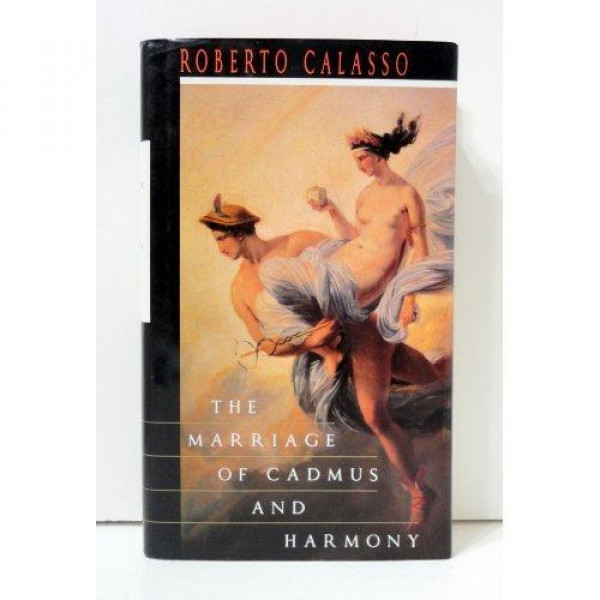


 Barry Spector's Blog